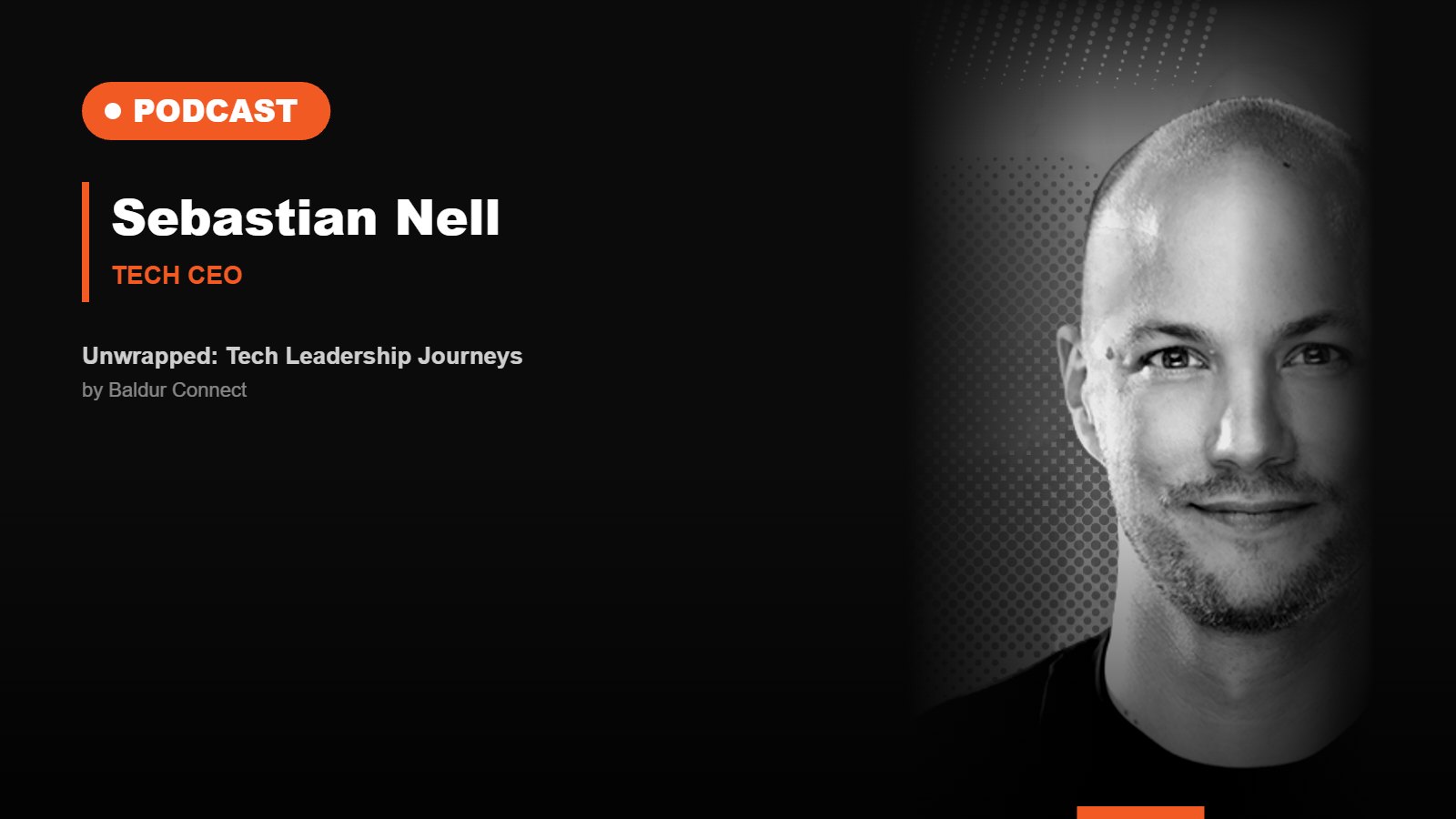
Podcast: Sebastian Nell on decentralised tech teams and why teams should hire their own people
Key takeaways
- Decentralised decisions make teams faster, more innovative and more resilient.
- Let the team a person will join decide on the hire - but give it full transparency on budget and expectations.
- Team culture can matter more than filling a hard-to-fill technical gap.
- Keyword-matching recruiters waste hiring managers' time. Knowing the person matters.
- AI is a job shifter, not a job killer. Hypergrowth means hyper risk.
About the episode
Sebastian Nell is a tech CEO whose company builds and runs engineering teams for clients. Earlier in his career he worked in the games industry at Crytek, where he first saw fully empowered teams in action. In this episode of Unwrapped: Tech Leadership Journeys, Alex Siletsky from Baldur Connect talks with him about decentralised organisations, hiring as a team and what AI changes for engineering work.
Listen to the podcast on Spotify
Why decentralise decisions?
Because a hierarchical company is only as responsive as the few people at the top. If everyone can make decisions, Sebastian says, the organisation becomes faster, more innovative and more resilient. In Germany he sees resistance, mainly because middle management has not yet found its role in autonomous teams. Often only IT becomes "agile" while the rest of the company stays the same.
What does "team hires team" mean?
The team the new person will join runs the hiring, and every member has to agree. At Crytek, Sebastian's team used a two-day process: technical work at the whiteboard, but also foosball and conversations about books. Once, the team turned down a technically excellent database architect - a role they badly needed - because a colleague felt he did not treat women with respect. The team then shared the missing work among themselves. For Sebastian it is the clearest example of a team putting its culture first.
It only works with structure:
- Teams of seven, at most nine people.
- Full transparency on costs and budget.
- Clear expectations of what the team has to build.
- A clear limit on team size, so every new hire moves the team forward and is not just another head.
Should HR own people development?
Sebastian thinks not. Picking up the slogan "kill HR" and the idea of "resourceful humans" from a former Crytek colleague, he argues that learning and development belong inside the team, because the team sees a person's work every day. Contracts and back-office work still need specialists.
What makes a good recruiter for tech teams?
Understanding the people, not just the keywords. Sebastian described recruiters who matched CVs against the requirements and ignored detailed culture briefings - even short videos about the company. His clients sometimes screen 40 CVs to invite one person, and then a team of 15 spends a whole day with that candidate, so every poor match is expensive. He contrasted this with Hannes from Baldur Connect, who talked about a candidate's social side and could even name the candidate's dogs.
Will AI replace engineers?
No. In his words, AI is "not a job killer, it's a job shifter". Sebastian expects AI to automate a large share of today's tasks, while the value of human work moves to creativity and originality: designing the solution, not typing the code. He follows the research and does not see artificial general intelligence arriving any time soon. His advice: use the tools now, even if today's tools will not last.
Is hypergrowth worth it?
Rarely, in his view: "hyper growth means hyper risk". He has seen start-ups hire aggressively to please investors and then let many people go again. First build a system that can absorb new people - onboarding, decision-making and responsibility in the teams - and then grow.
What it means for your hiring
- Involve the future team early and give them the budget and the goals.
- Brief recruiters on the team and culture, and expect them to know candidates as people.
- Grow headcount at the pace your onboarding can handle.
Related: Active sourcing guide, Hiring a CTO in Germany and Embedded recruiter.
Building an engineering team in Germany?

FAQ
What is "team hires team"?
A hiring process where the team the new person will join interviews them and decides together - in Sebastian Nell's teams, every member had to agree.
How big should a self-organising team be?
Sebastian Nell recommends seven to nine people, with full transparency on costs, budget and expectations.
Where can I listen to the episode?
On Spotify, in the show Unwrapped: Tech Leadership Journeys by Baldur Connect.
Based on the episode of Unwrapped: Tech Leadership Journeys with Sebastian Nell, recorded by Baldur Connect. Quotes lightly edited for readability.
Related reading